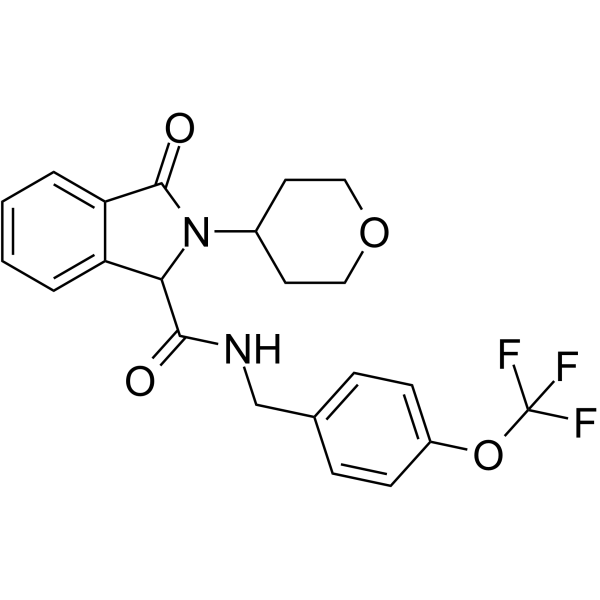
Sodium Channel
Na channels; Na+ channels
Sodium channels are integral membrane proteins that form ion channels, conducting sodium ions (Na+) through a cell's plasma membrane. They are classified according to the trigger that opens the channel for such ions, i.e. either a voltage-change (Voltage-gated, voltage-sensitive, or voltage-dependent sodium channel also called VGSCs or Nav channel) or a binding of a substance (a ligand) to the channel (ligand-gated sodium channels). In excitable cells such as neurons, myocytes, and certain types of glia, sodium channels are responsible for the rising phase of action potentials. Voltage-gated Na+ channels can exist in any of three distinct states: deactivated (closed), activated (open), or inactivated (closed). Ligand-gated sodium channels are activated by binding of a ligand instead of a change in membrane potential.
Sodium Channel Isoform Specific Products
-
Sodium Channel
(628)
View all products
-
Nav1.1
(11)
View all products
-
Nav1.2
(16)
View all products
-
Nav1.3
(14)
View all products
-
Nav1.4
(14)
View all products
-
Nav1.5
(21)
View all products
-
Nav1.6
(12)
View all products
-
Nav1.7
(62)
View all products
-
Nav1.8
(41)
View all products
-
Nav1.9
(2)
View all products
All Product Categories
-
Sodium Channel Inhibitors
(619)
View all products
-
Sodium Channel Agonists
(10)
View all products
-
Sodium Channel Antagonists
(30)
View all products
-
Sodium Channel Activators
(35)
View all products
-
Sodium Channel Modulators
(30)
View all products
-
Sodium Channel Controls
(5)
View all products
-
Sodium Channel Ligands
(3)
View all products
-
Sodium Channel Related Products (802)
Related Products (802)

-
Antibodies (9)
-
Related Compound Screening Libraries (1)
-
Sodium Channel Isoform Comparison
-
Phenytoin-15N2,13C
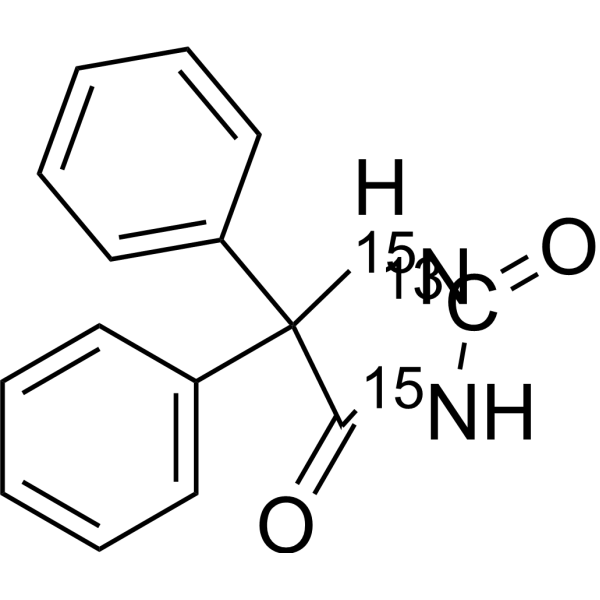 0 ImagesPhenytoin-15N2,13C is the 13C and 15N labeled Phenytoin. Phenytoin (5,5-Diphenylhydantoin) is a potent Voltage-gated Na+ channels (VGSCs) blocker. Phenytoin has antiepileptic activity and reduces breast tumour growth and metastasis in mice.
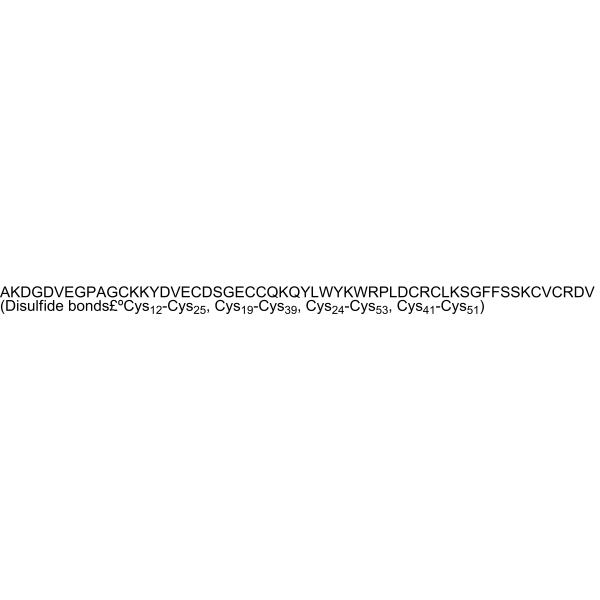
-
Articaine
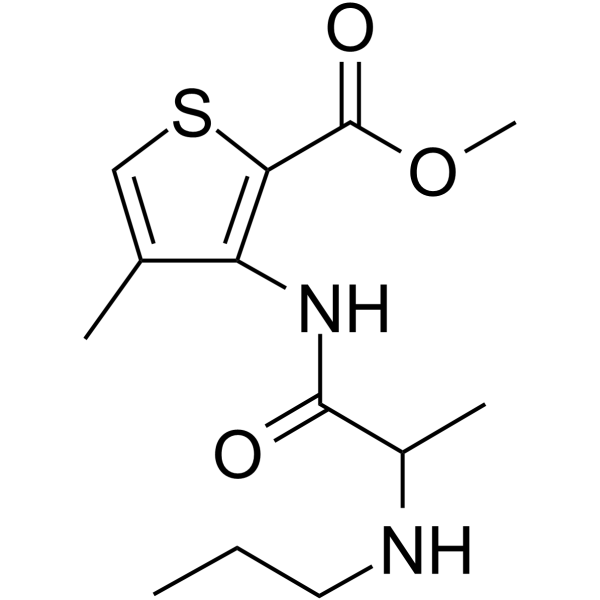 0 ImagesCat. No.: HY-B0516ACAS No.: 23964-58-1Synonyms: Hoe-045 free baseArticaine (Hoe-045) is a selective inhibitor of voltage-gated sodium channels (such as rNav1.4, hNav1.7, and rNav1.8), with an IC50 of 15.8 μM for open-state Na+ channels, and IC50 of 40.6 μM and 378 μM for inactivated and resting-state Na+ channels, respectively. Articaine exerts local anesthetic activity by inhibiting Na+ influx to block nerve impulse conduction, and can also inhibit NF-κB activation and NLRP3 inflammasome pathways, exhibiting anti-inflammatory function. Articaine can be used in the study of dental local anesthesia and inflammatory-related diseases (such as acute kidney injury).
-
BN-82451 dihydrochloride
 0 ImagesCat. No.: HY-119274CAS No.: 663172-95-0BN-82451 dihydrochloride, an orally active and CNS-penetrated antioxidant and a multitargeting neuroprotective agent, exert a significant protection in experimental animal models mimicking aspects of cerebral ischemia, Parkinson disease, Huntington disease, and more particularly amyotrophic lateral sclerosis.
-
Anti-SLC34A2 (Lifastuzumab)-SPDB-DM4
 0 ImagesCat. No.: HY-171736Anti-SLC34A2 (Lifastuzumab)-SPDB-DM4 is an antibody-drug conjugate (ADC) consisting of the humanized anti-SLC34A2 (sodium-dependent phosphate transporter 2) antibody Lifastuzumab (HY-P99970) conjugated with the linker SPDB (HY-12448) and the tubulin inhibitor DM4 (HY-12454). The ADC toxic molecule and linker part are sulfo-SPDB-DM4 (HY-101141). Anti-SLC34A2 (Lifastuzumab)-SPDB-DM4 can be used in cancer research.
-
HNS-32
 0 ImagesCat. No.: HY-117135CAS No.: 186086-10-2HNS-32 is a compound with antiarrhythmic and vasodilatory effects in canine hearts, showing superior protective effects against ischemic and reperfusion arrhythmias compared to an equivalent dose of Mexiletine hydrochloride (HY-A0093). Furthermore, HNS-32 exhibits significant negative chronotropic effects on mammalian ventricular myocardium, indicating its potential application value in the study of acute coronary syndrome.
-
Aah II
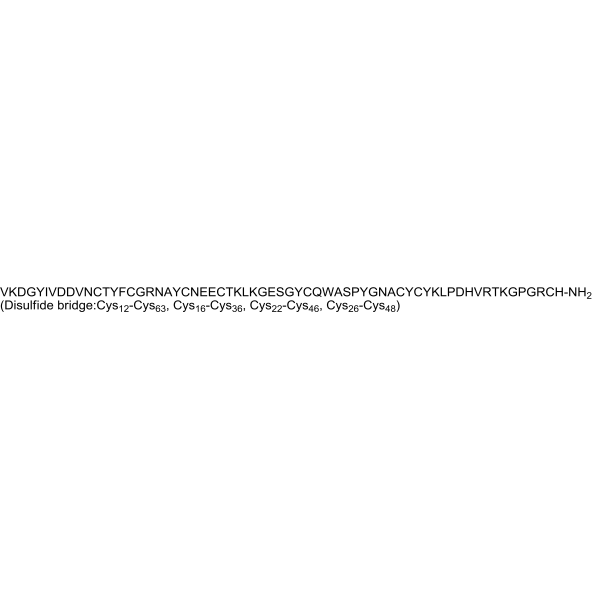 0 ImagesCat. No.: HY-P5144Aah II is a sodium channel modulator. Aah II is a toxin that can be isolated from the venom of scorpion Androctonus australis.
-
Ipidacrine-d10
 0 ImagesCat. No.: HY-W027553S1Synonyms: NIK-247-d9 free baseIpidacrine-d9 (NIK-247-d9 (free base)) is the deuterium labeled Ipidacrine (HY-W027553). Ipidacrine is orally active and brain-penetrant AChE and BuChE inhibitors with IC50 values of 1 μM and 1.9 μM, respectively, which is also a partial agonist of M2-cholinergic receptors and a reversible cholinesterase inhibitor. Ipidacrine has a stimulating effect on neuromuscular transmission and excitation along the nerve fibres with a moderately anti-pain effect. Ipidacrine is an aminopyridines and is structurally similar to Tacrine (HY-111338). Ipidacrine is effective in various amnesia models, improves erectile function and inhibits K+ and Na+-channels in the neuronal membrane in diabetic rats. Ipidacrine is promising for research of Alzheimer’s disease, ischaemic stroke, idiopathic neuropathy of the facial nerve, diabetes mellitus-induced erectile dysfunction and other deficits in central or peripheral cholinergic deseases.
-
DA-0218
 0 ImagesCat. No.: HY-182710CAS No.: 1081317-31-8DA-0218 is a Nav1.7 inhibitor. DA-0218 exerts state-dependent inhibitory effects. DA-0218 alleviates formalin-induced inflammatory pain behavior and Paclitaxel-induced mechanical hyperalgesia in mice. DA-0218 inhibits Histamine-induced acute pruritus and lymphoma-induced chronic pruritus in mice. DA-0218 can be used in research related to inflammatory pain, neuropathic pain, acute pruritus and chronic pruritus.
-
Oxcarbazepine-d10
 0 ImagesCat. No.: HY-B0114S3CAS No.: 2749432-28-6Synonyms: GP 47680-d10Oxcarbazepine-d10 (GP 47680-d10) is deuterium labeled Oxcarbazepine. Oxcarbazepine is a sodium channel blocker. Oxcarbazepine significantly inhibits glioblastoma cell growth and induces apoptosis or G2/M arrest in glioblastoma cell lines. Anti-cancer and anticonvulsant effects.
-
Riluzole hydrochloride (Standard)
 0 ImagesSynonyms: PK 26124 hydrochloride (Standard)Riluzole hydrochloride (Standard) is the analytical standard of Riluzole hydrochloride. This product is intended for research and analytical applications. Riluzole hydrochloride is an anticonvulsant agent and belongs to the family of use-dependent Na+ channel blocker which can also inhibit GABA uptake with an IC50 of 43 μM.
-
Oxcarbazepine-d4
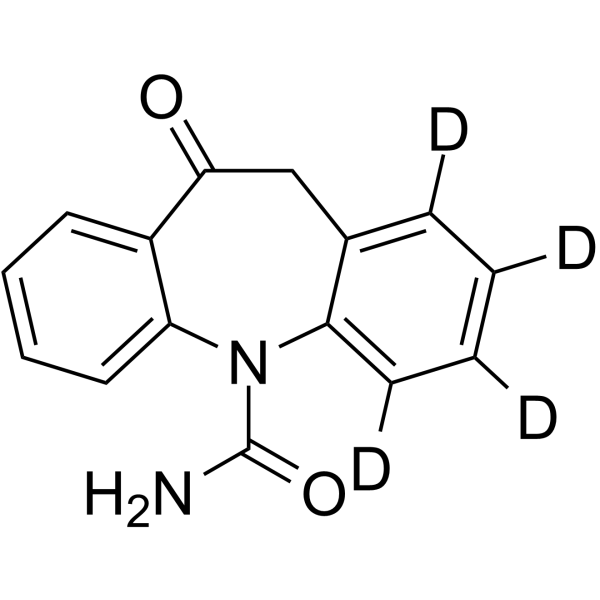 0 ImagesCat. No.: HY-B0114SCAS No.: 1020719-71-4Synonyms: GP 47680-d4Oxcarbazepine-d4 (GP 47680-D4) is the deuterium labeled Oxcarbazepine. Oxcarbazepine is a sodium channel blocker. Oxcarbazepine significantly inhibits glioblastoma cell growth and induces apoptosis or G2/M arrest in glioblastoma cell lines. Anti-cancer and anticonvulsant effects.
-
Riluzole-13C6
 0 ImagesCat. No.: HY-B0211S1Synonyms: PK 26124-13C6Riluzole-13C6 (PK 26124-13C6) is 13C labeled Riluzole. Riluzole is an anticonvulsant agent and belongs to the family of use-dependent Na+ channel blocker which can also inhibit GABA uptake with an IC50 of 43 μM.
-
DPI 201-106 (Standard)
 0 ImagesCat. No.: HY-19666RCAS No.: 97730-95-5Synonyms: SDZ 201106 (Standard)DPI 201-106 (Standard) is the analytical standard of DPI 201-106. This product is intended for research and analytical applications. DPI 201-106 (SDZ 201106) is a cardiotonic agent with a synergistic sarcolemmal and intracellular mechanism of action. DPI 201-106 shows cardioselective modulation of voltage-gated sodium channels (VGSCs) resulting in a positive inotropic effect.
-
Ropivacaine hydrochloride monohydrate (Standard)
 0 ImagesRopivacaine (hydrochloride monohydrate) (Standard) is the analytical standard of Ropivacaine (hydrochloride monohydrate). This product is intended for research and analytical applications. Ropivacaine hydrochloride monohydrate is a potent sodium channel blocker and blocks impulse conduction via reversible inhibition of sodium ion influx in nerve fibrese. Ropivacaine is also an inhibitor of K2P (two-pore domain potassium channel) TREK-1 with an IC50 of 402.7 μM in COS-7 cell's membrane. Ropivacaine is widely used for regional anesthesia and neuropathic pain management in vivo.
-
Recainam hydrochloride
 0 ImagesCat. No.: HY-105454ACAS No.: 74752-07-1Synonyms: Wy-42362 hydrochlorideRecainam (Wy-42362) hydrochloride is a potent orally active antiarrhythmic agent and a sodium channel inhibitor. Recainam hydrochloride elevates ventricular fibrillation threshold, suppresses induced cardiac dysrhythmias, and may accentuate cardiac tissue refractoriness heterogeneity. Recainam hydrochloride can be used for the research of arrhythmias.
-
Eslicarbazepine-d4
 0 ImagesCat. No.: HY-114703S1Synonyms: BIA 2-194-d4Eslicarbazepine-d4 (BIA 2-194-d4) is deuterium labeled Eslicarbazepine. Eslicarbazepine is an oral anticonvulsant indicated for the adjunctive treatment of partial seizures.
-
Permethrin-d6
 0 ImagesCat. No.: HY-W774926CAS No.: 82523-59-9Synonyms: NRDC-143-d6Permethrin-d6 (NRDC-143-d6) is deuterium labeled Permethrin. Permethrin (NRDC-143) is an insecticide, acaricide and a high selectively inhibitor of the Mitochondrial complex I, found in sediment and water samples. Permethrin shows estrogenic in vivo and anti-estrogenic activity in vitro. Permethrin also acts as a neurotoxin affecting neuron membranes by prolonging Sodium channel activation. Permethrin decreases resistance to bacterial infections in medaka (Oryzias latipes).
-
(+)-Kavain (Standard)
 0 Images(+)-Kavain (Standard) is the analytical standard of (+)-Kavain. This product is intended for research and analytical applications. (+)-Kavain, a main kavalactone extracted from Piper methysticum, has anticonvulsive properties, attenuating vascular smooth muscle contraction through interactions with voltage-dependent Na+ and Ca2+ channels. (+)-Kavain is shown to bind at the α4β2δ GABAA receptor and potentiate GABA efficacy. (+)-Kavain is used as a treatment for inflammatory diseases, its anti-inflammatory action has been widely studied.